Over the past few years, vascular health awareness has increased significantly in Hyderabad. People are becoming more proactive about diagnosing conditions like varicose veins, deep vein thrombosis (DVT), and chronic venous insufficiency before they turn serious.
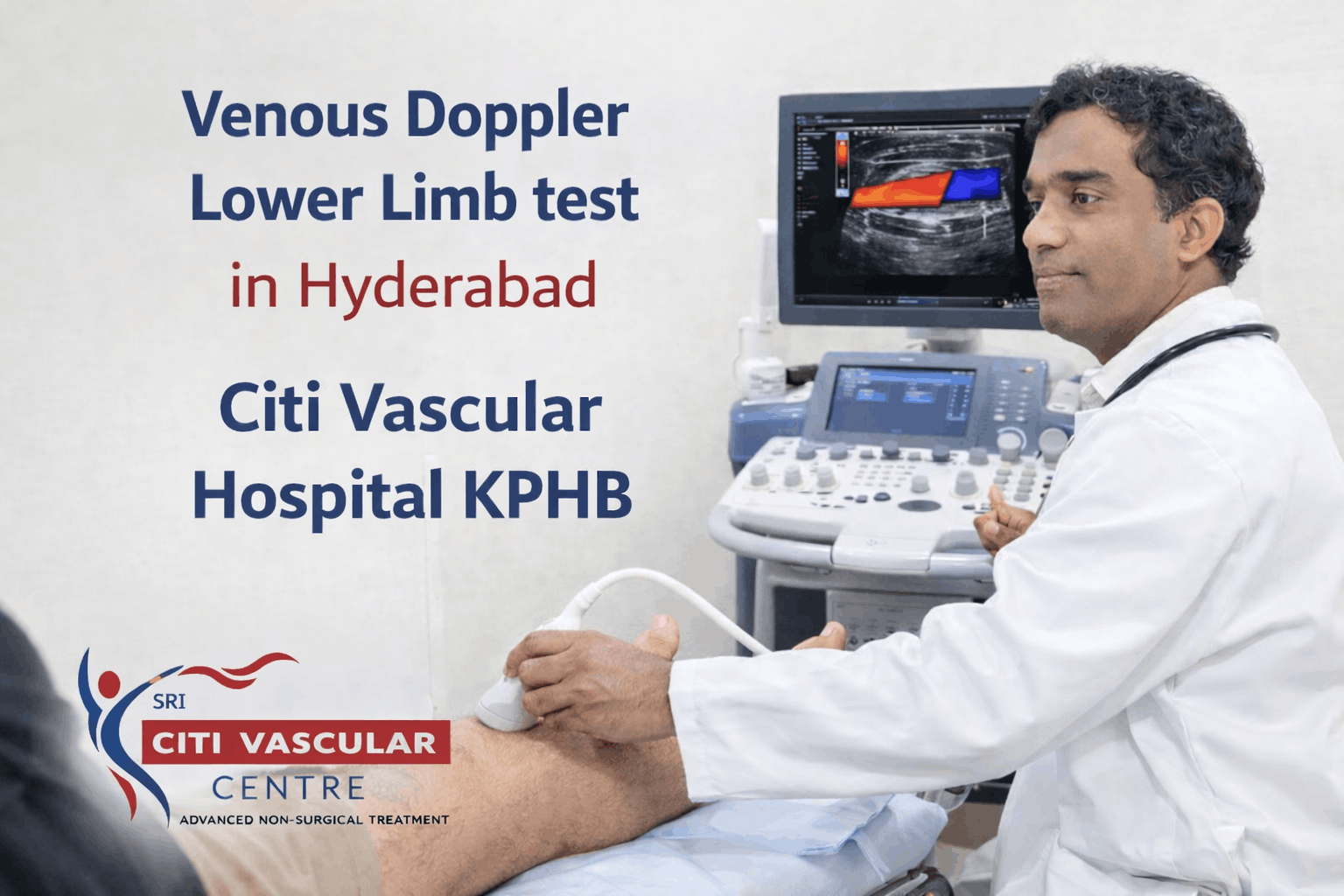
One diagnostic test that doctors frequently recommend is the Venous Doppler Lower Limb test. It’s a non-invasive ultrasound scan that evaluates blood flow in the veins of the legs and helps detect blockages, clots, or valve problems.
In a fast-growing healthcare hub like Hyderabad, advanced diagnostic facilities are now widely available. Hospitals equipped with modern Doppler ultrasound technology allow doctors to identify vascular problems early and recommend the right treatment.
“Venous Doppler Lower Limb test in Hyderabad”
“Best vascular Doppler scan near KPHB”
“DVT scan in Hyderabad”
“Doppler Test for Varicose Veins”
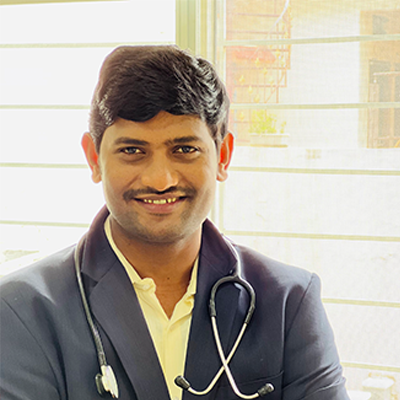
Specialized centers such as Citi Vascular Hospital, KPHB, led by Dr. Shaileshkumar Garge, provide accurate Doppler testing and expert vascular consultation under one roof.
So, if you’re experiencing leg swelling, pain, visible veins, or heaviness, this guide will walk you through everything you need to know about the Venous Doppler Lower Limb test in Hyderabad in 2026.
A Venous Doppler Lower Limb test is a specialized ultrasound examination used to assess blood flow in the veins of the legs.
Unlike a regular ultrasound, Doppler technology measures how blood moves through your veins, helping doctors detect abnormalities.
Doctors commonly recommend the test for diagnosing:
Deep Vein Thrombosis (DVT)
Varicose veins
Chronic venous insufficiency
Venous reflux
Blood clot formation
Leg swelling or unexplained pain
No radiation
No injections required
Completely non-invasive
Because of these advantages, the Venous Doppler Lower Limb test in Hyderabad has become a standard diagnostic tool for vascular specialists.
Many patients feel nervous before any medical test. The good news is that The Doppler venous scan is simple and painless.
Here’s how the procedure usually works.
In most cases, no special preparation is needed.
You may be asked to:
Wear loose clothing
Remove tight garments around the legs
Lie or stand comfortably on the examination table
The entire process typically takes 10-20 minutes.
A technician applies a water-based gel to the skin on your legs.This gel helps the ultrasound probe transmit sound waves clearly.
A handheld device called a transducer is moved gently across your leg.
Sends sound waves into your body
Captures echoes from the veins
Converts them into images on the screen
Doctors can visualize blood flow in real time.
During the scan, the doctor may ask you to:
Change positions
Hold your breath briefly
Flex your foot
These movements help detect venous reflux or blocked blood flow.
In many vascular centers like Citi Vascular Hospital KPHB, results are reviewed quickly.
A vascular specialist like Dr. Shaileshkumar Garge can interpret the findings and recommend the next steps.
One of the biggest reasons the Venous Doppler Lower Limb test is widely used is its safety.
Key Safety Benefits
No radiation exposure
Completely painless
Safe for pregnant women
No injections or contrast dyes required
Because it uses high-frequency sound waves, it is considered one of the safest diagnostic imaging methods available.
The risks are extremely minimal.
Some patients may experience:
Mild discomfort from the probe pressure
Temporary cold sensation from the gel
But overall, the test is very safe and well tolerated.
Choosing the right vascular specialist is just as important as choosing the right diagnostic test.
Dr. Shaileshkumar Garge is a well-known vascular specialist in Hyderabad with extensive experience in diagnosing and treating vein disorders.
Here are a few reasons patients prefer this center:
Advanced Diagnostic Technology
The hospital uses modern Doppler ultrasound systems that provide high-resolution vascular imaging.
Specialized Vascular Care
Unlike general diagnostic centers, this facility focuses specifically on vascular diseases and treatments.
Comprehensive Treatment Options
After diagnosis, patients can access treatments such as:
Varicose vein laser treatment
Sclerotherapy
Endovascular procedures
DVT management
Convenient Location
Located in KPHB, Kukatpally, the hospital is easily accessible from:
Miyapur
HiTech City
Kukatpally
JNTU
Moosapet
This makes it a convenient choice for people across Hyderabad and surrounding areas.
Feature |
DopplerLower Limb Venous Test |
CT Venography |
MRI Venography |
|
Radiation |
No |
Yes |
No |
|
Cost |
Affordable |
Expensive |
Very expensive |
|
Time |
10–20 minutes |
30–60 minutes |
45–90 minutes |
|
Invasiveness |
Non-invasive |
Contrast injection |
Contrast sometimes required |
|
Accuracy for Vein Flow |
Excellent |
Good |
Good |
|
Availability |
Widely available |
Limited |
Limited |
For most patients, Doppler ultrasound is the first-line diagnostic test for vein disorders.
Below is a simplified decision process doctors follow.
Leg Pain / Swelling
│
▼
Clinical Examination
│
▼
Doppler Lower Limb Venous Test
│
├── Normal Blood Flow → Lifestyle Advice
│
├── Venous Reflux → Varicose Vein Treatment
│
└── Blood Clot Detected → DVT Management
Choose a specialized vascular center for accurate Doppler imaging and expert interpretation.
Wear loose clothing to make the examination quicker and more comfortable.
Share your symptoms clearly with the doctor, including swelling, pain, or visible veins.
Follow doctor instructions during the scan, such as changing positions or holding your breath briefly.
Schedule early diagnosis if you notice persistent leg discomfort or swelling to prevent complications.
Consult a vascular specialist like Dr. Shaileshkumar Garge for proper diagnosis and treatment planning.
These simple steps can help ensure accurate Doppler results and effective vein health evaluation.
Doctors recommend the test if you experience:
Persistent leg swelling
Visible varicose veins
Sudden leg pain
Skin discoloration in the legs
These symptoms could indicate vein circulation problems.
The cost can vary depending on the diagnostic center and equipment used.
Typically, it ranges between:
₹1500 – ₹4000 in Hyderabad (2026 estimate).
Specialized vascular centers may also include doctor consultation and detailed analysis.
No. The procedure is completely painless and non-invasive.
You might feel slight pressure from the probe, but it’s usually very comfortable.
Most scans take 10-20 minutes, depending on the complexity of the case.
Yes. Doppler ultrasound is one of the most reliable methods for detecting Deep Vein Thrombosis (DVT).
Early detection is critical because untreated clots can lead to serious complications.
No fasting is required for a lower limb venous Doppler scan.
You can eat and drink normally before the test.