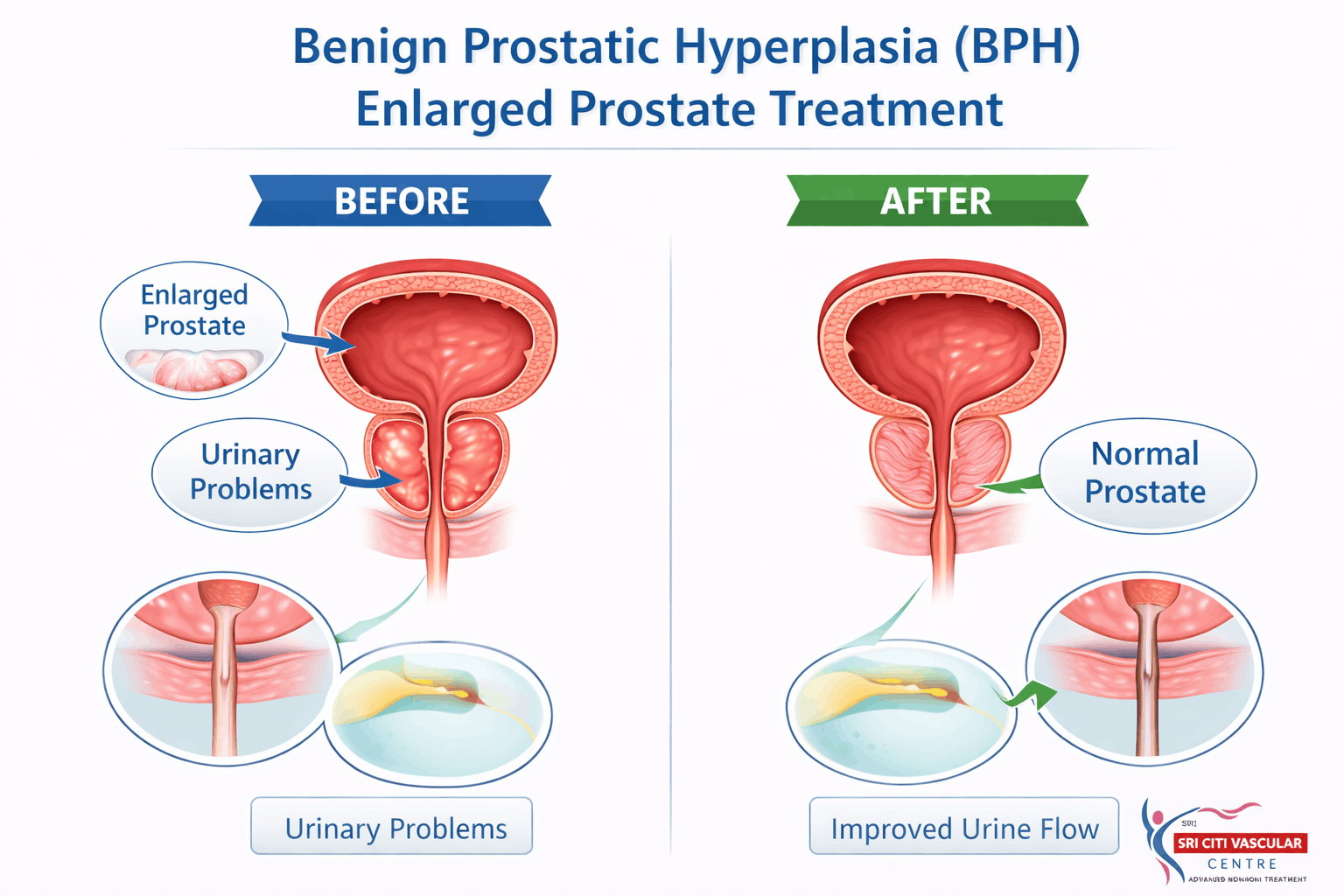
BPH is a non-cancerous enlargement of the prostate gland, a small organ located below the bladder in men. As the prostate grows, it can press against the urethra (the tube that carries urine out of the body), leading to urinary problems.
Here’s the kicker—BPH is incredibly common. In fact:
Around 50% of men over 50 experience symptoms
Nearly 90% of men over 80 have some degree of prostate enlargement
So if you’re dealing with it, you’re definitely not alone.
Causes of Enlarged Prostate (BPH)
Now, you might be wondering—what actually causes this condition?
Well, the exact cause isn’t fully understood, but several factors play a role:
Book your Appointment here: | Appoinment: |Call +91-7032508468| Whatsapp:+91-7337583901
As men age, hormonal changes—especially involving testosterone and estrogen—can trigger prostate growth.
Dihydrotestosterone (DHT), a hormone derived from testosterone, is known to contribute to prostate enlargement.
If your father or grandfather had BPH, chances are higher that you might develop it too.
Obesity
Lack of physical activity
Poor diet
These can increase the risk over time.
Conditions like diabetes and heart disease may also contribute indirectly.
Common Symptoms of BPH
Here’s where things get noticeable—and often frustrating.
Frequent urination (especially at night—nocturia)
Weak urine stream
Difficulty starting urination
Dribbling at the end
Feeling like the bladder isn’t fully empty
Sudden urge to urinate
Complete inability to urinate
Blood in urine
Recurrent urinary tract infections
If you’re experiencing any of these, it’s time to consult a specialist—sooner rather than later.
Dr. Shaileshkumar Garge is known for his expertise in minimally invasive treatments like Prostate Artery Embolisation (PAE). He focuses on non-surgical solutions, personalized care, and faster recovery with advanced techniques.
Citi Vascular Hospital, KPHB offers modern infrastructure, advanced interventional radiology, minimally invasive procedures, and dedicated patient care—ensuring safe treatment with quick recovery.
Expert care + advanced technology + patient comfort = better outcomes.
Treatment Type |
Invasiveness |
Recovery Time |
Hospital Stay |
Effectiveness |
Side Effects |
Medication |
No |
Ongoing |
None |
Moderate |
Mild |
PAE |
Very Low |
2–5 days |
1-2 days |
High |
Very Low |
TURP Surgery |
High |
2–4 weeks |
2–3 days |
High |
Moderate |
treatment has advantages, so consulting a specialist is essential before making a decision.
Step 1: Mild symptoms?
➡ Try lifestyle changes + medication
Step 2: Symptoms worsening?
➡ Consider minimally invasive options like PAE
Step 3: Severe complications?
➡ Surgical intervention may be required
Want to manage BPH effectively? Here are some practical tips:
Cut down on caffeine and alcohol
Don’t delay urination
Maintain a healthy weight
Exercise regularly
Follow your doctor’s advice consistently
Schedule regular prostate check-ups
Small changes can make a big difference over time.
No, BPH is non-cancerous and doesn’t increase cancer risk.
Yes! Options like prostate artery embolisation (PAE) offer effective enlarged prostate treatment without surgery.
Typically 1–2 hours, and most patients go home the same or next day.
Not always. Lifestyle changes and monitoring may be enough initially.
If symptoms interfere with daily life or worsen over time.
Book your Appointment here: | Appoinment: |Call +91-7032508468| Whatsapp:+91-7337583901