
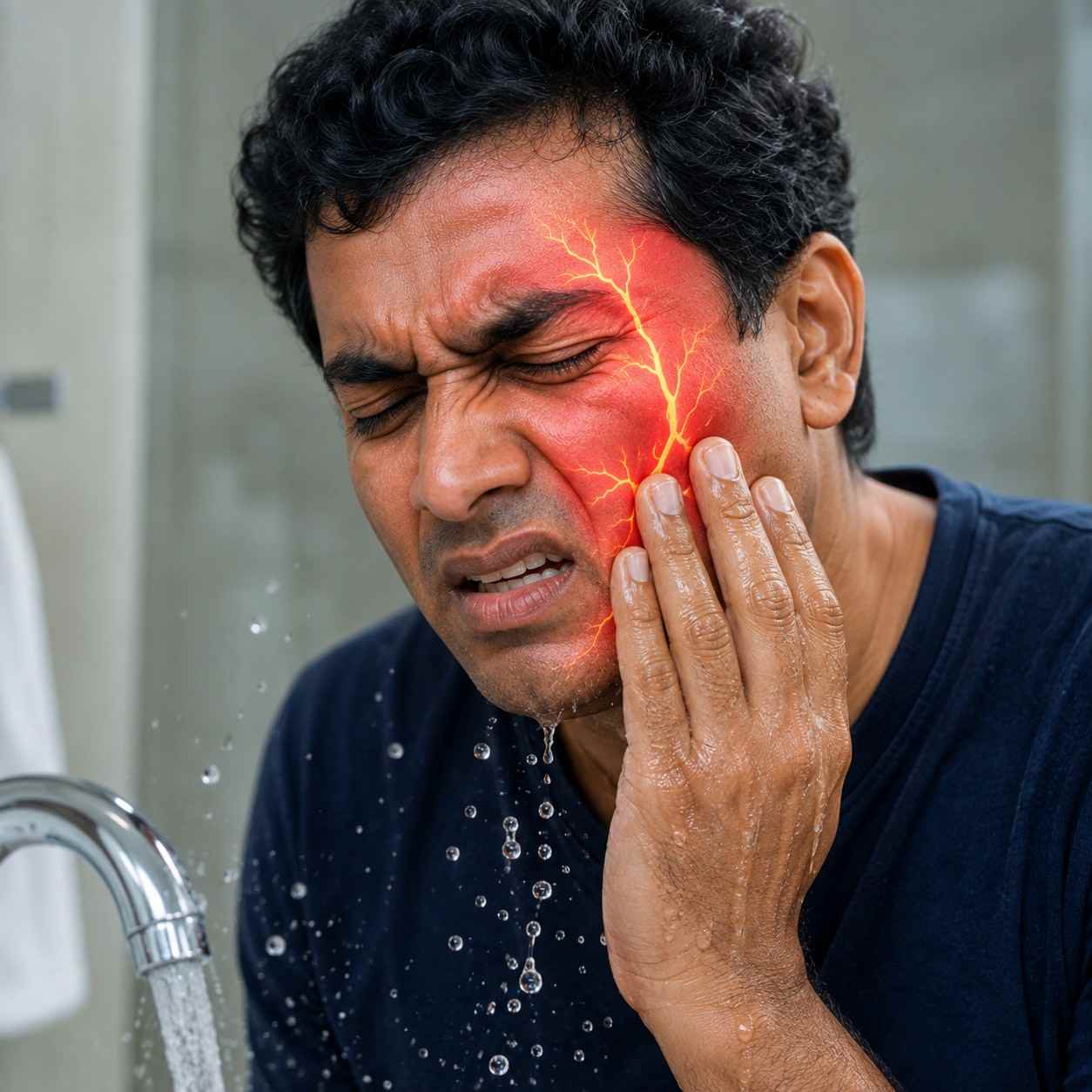
Trigeminal neuralgia is one of the most severe facial pain disorders known to medicine — described by patients as sudden electric shocks across the face triggered by eating, speaking, or even a gentle breeze. When medications stop working or cause unacceptable side effects, radiofrequency ablation of the Gasserian ganglion offers rapid, minimally invasive pain relief through a 30–60 minute procedure at Citi Vascular Centre, KPHB, Hyderabad.

Trigeminal neuralgia is a neurological pain disorder in which the trigeminal nerve — the main sensory nerve of the face — generates sudden, severe, electric-shock-like pain attacks in one or more facial divisions:
V1 — Forehead and eye region
V2 — Cheek, nasolabial area, upper lip, and upper teeth
V3 — Lower jaw, chin, and lower teeth
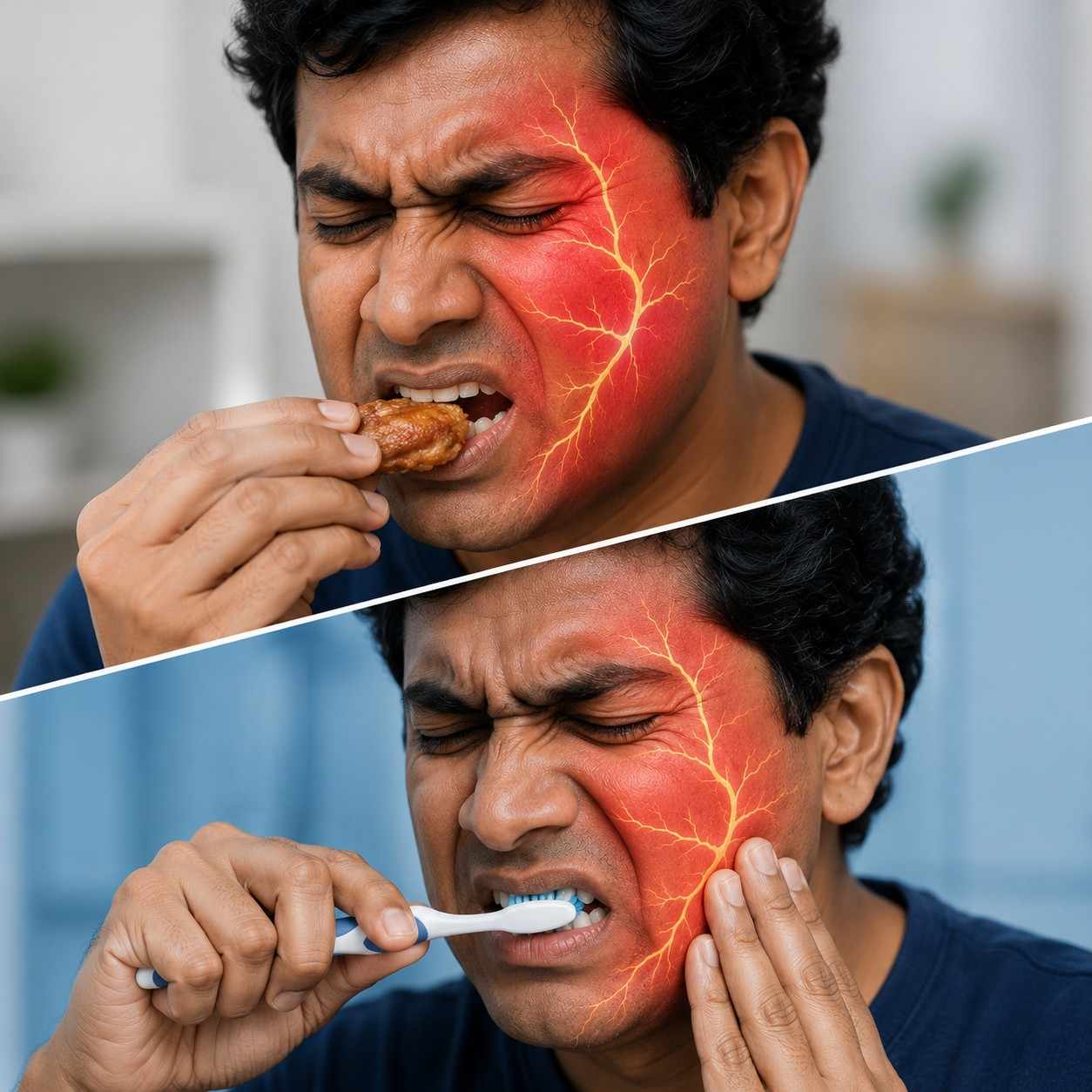
Attacks are typically brief but repetitive, triggered by light touch, eating, speaking, or cold air. The condition profoundly affects eating, oral hygiene, conversation, and quality of life.
Gasserian ganglion RFA is a fluoroscopy-guided minimally invasive procedure in which a thin electrode is placed through the foramen ovale — a natural skull-base opening — to the trigeminal ganglion. Electrical stimulation first identifies the exact V1, V2, or V3 division causing the pain, then controlled radiofrequency heat is delivered to interrupt the pain-transmitting nerve fibres. No open surgery. No craniotomy.
| Features | Open Surgery/MVD | Gasserian Ganglion RF Ablation |
|---|---|---|
| Cuts, Wounds, and Stitches | Yes | No |
| Pain During / After | High | Mild Pain |
| Blood Loss | Moderate — surgical dissection and bone work | None — no bone removed, no vessels cut |
| Procedure Time | 3–4 hours (craniotomy + decompression + closure) | 30–60 minutes total |
| Anesthesia | General Anesthesia - Always Required | Local anaesthesia + IV sedation (GA for children or complex cases) |
| Hospital Stay | 3-5 days | Same-day or overnight discharge |
| Best Suited For | Classical TN with convincing neurovascular compression | Good surgical candidate | Medication-refractory TN | No convincing compression | Prefer minimally invasive |
Minimally invasive — no open surgery, no craniotomy
Rapid pain relief — often within hours to days
Division-specific targeting using electrical stimulation
30–60 minute procedure
Same-day or overnight discharge
No general anaesthetic required for most adult patients
Can be repeated if pain recurs
Insurance covered in most cases
Trigeminal Neuralgia symptoms may vary with different stages:

V1 Pain
V2 Maxillary Pain
M3 Mandibular Pain
For the right patient, other treatments may also be considered — each with specific indications:
Microvascular decompression (MVD) — for classical TN with convincing neurovascular compression in surgically fit patients [link to MVD page]
Balloon compression — percutaneous alternative; no stimulation response required [link]
Glycerol rhizotomy — chemical neurolysis through foramen ovale [link]
Gamma Knife radiosurgery — non-incisional, delayed onset [link]
Medications (carbamazepine, oxcarbazepine) — first-line long-term treatment [link]
Dr. Shaileshkumar Garge discusses all applicable options at consultation based on the patient's MRI, clinical diagnosis, and preferences — not a single default procedure.

The cost of radiofrequency ablation for trigeminal neuralgia at Citi Vascular Centre, KPHB, Hyderabad varies depending on the procedure complexity, anaesthesia type, imaging requirements, and hospital stay. A personalised written estimate is provided after consultation and MRI review. Indicative range: Rs 80,000 – Rs 1,50,000 per session.
Insurance covered as per policy terms — team assists with pre-authorisation
0% EMI facility available for eligible patients
No hidden charges — written estimate provided before any commitment
Call +91-73375 83901 or WhatsApp 73375 83901 for a cost estimate
|
1. |
Dr. Shaileshkumar Garge — FRCR (UK), FNVIR (CMC Vellore), EBIR (Spain) — one of Hyderabad's most internationally credentialled IR specialists for trigeminal neuralgia |
|
2. |
Fluoroscopy-guided Gasserian ganglion RFA — division-specific targeting with electrical stimulation confirmation |
|
3. |
Honest assessment of all options — RF, MVD, balloon, glycerol, Gamma Knife, medications — before any procedure is recommended |
|
4. |
MRI reviewed personally by Dr. Garge before treatment — neurovascular compression assessed carefully, not just vascular contact |
|
5. |
Same-day or overnight discharge | 12+ years dedicated IR | 15,000+ image-guided procedures |
|
6. |
Insurance assistance at no extra charge | 0% EMI | Outstation patients welcome — WhatsApp MRI before travel |
|
7. |
Treatment using USFDA-approved radiofrequency technology | Evidence-aligned with EAN 2019 guideline |