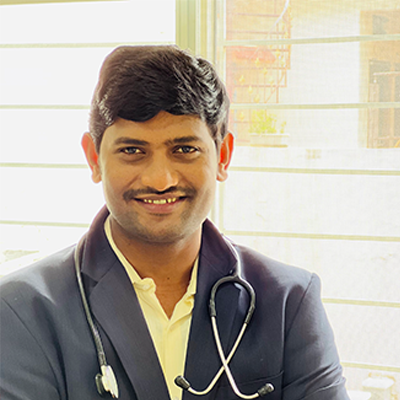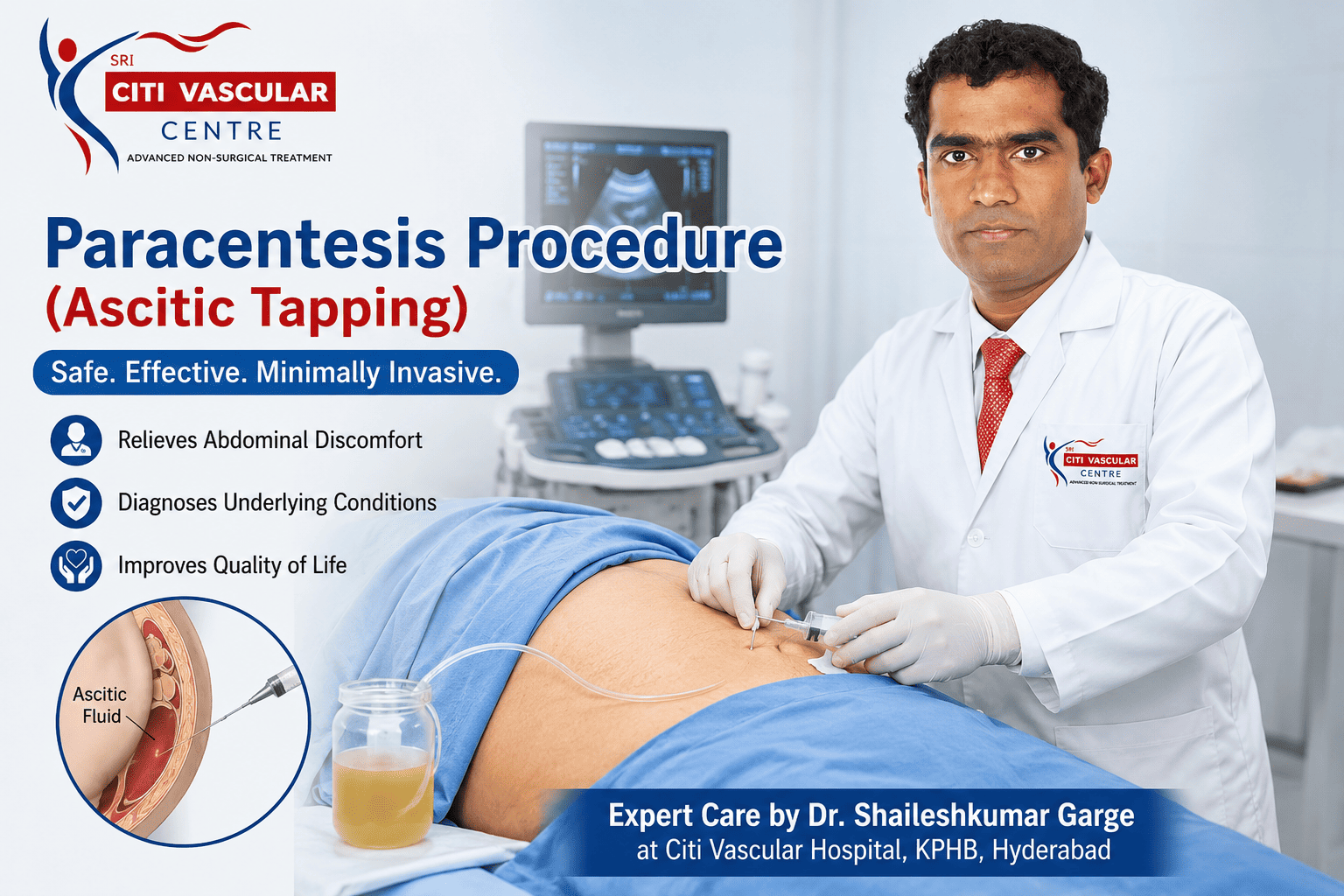
Paracentesis (Ascitic Tapping) is a minimally invasive procedure used to remove excess fluid from the abdomen caused by liver disease, cancer, kidney failure, or infection. The procedure helps relieve abdominal swelling, breathing difficulty, and discomfort while also helping doctors diagnose the underlying cause. At Citi Vascular Centre, ultrasound-guided paracentesis procedures are performed safely by Dr. Shailesh Kumar Garge.
This comprehensive guide explains everything about Paracentesis Treatment in Hyderabad, including indications, procedure steps, recovery, benefits, risks, expert tips, and the Paracentesis Cost in Hyderabad, helping patients make informed healthcare decisions with confidence.
What Is Paracentesis Ascitic Tapping Procedure?
What are the symptoms of Ascitis?
When should you consult a doctor for ascites?
Why Is Paracentesis Done?
What are the Common Indications for Paracentesis?
What are the types of Paracentesis Procedures?
How the Procedure Is Performed?
What are Benefits of Ascitic Tapping?
What are the Risks and Possible Complications of Paracentesis?
Recovery After the Procedure
What is Paracentesis Procedure Cost in Hyderabad?
Why Choose Dr. Shaileshkumar Garge, Citi Vascular Hospital, KPHB, Hyderabad?
Expert Tips to Get the Best Results
Frequently Asked Questions (FAQs)
Summary
Paracentesis, commonly called Ascitic Tapping, is a medical procedure used to remove excess fluid accumulated in the abdominal cavity. The fluid is called ascitic fluid, and its buildup is known as ascites.
During the procedure, a thin needle or catheter is inserted into the abdomen to drain the fluid safely. Doctors may perform paracentesis for two major reasons:
Diagnostic purpose – to analyze the fluid and determine the cause
Therapeutic purpose – to relieve symptoms caused by fluid buildup
The procedure is generally quick, minimally invasive, and often performed under ultrasound guidance for better precision and safety.
Abdominal swelling
Tight stomach
Breathing difficulty
Rapid weight gain
Leg swelling
Loss of appetite
Abdominal discomfort
rapid swelling
fever
breathing difficulty
severe pain
reduced urine output
Doctors recommend the Paracentesis Procedure (Ascitic Tapping) when a patient experiences significant abdominal fluid accumulation.
The procedure helps:
Reduce abdominal pressure
Improve breathing difficulties
Relieve abdominal pain and discomfort
Diagnose infections or cancer
Improve mobility and appetite
Ascites can occur due to several health conditions, including:
Liver cirrhosis
Chronic liver disease
Cancer
Heart failure
Kidney disease
Tuberculosis
Pancreatitis
Without proper treatment, severe ascites may lead to infections and other serious complications.
The Paracentesis Procedure is commonly advised in the following situations:
1. Liver Cirrhosis
This is the most common reason for ascites. Fluid accumulation occurs due to increased pressure in liver blood vessels.
2. Cancer-Related Ascites
Patients with ovarian, liver, pancreatic, or stomach cancer may develop abdominal fluid buildup.
3. Suspected Infection
Doctors perform diagnostic paracentesis to detect infections like spontaneous bacterial peritonitis (SBP).
4. Severe Abdominal Distension
Large fluid collections can make breathing and movement difficult.
5. Kidney or Heart Failure
Fluid retention due to organ dysfunction can cause ascites.
6. Tuberculous Peritonitis
Tuberculosis affecting the abdominal lining may require fluid analysis.
A small amount of fluid is collected and sent for laboratory analysis.
The fluid is tested for:
Infection
Cancer cells
Protein levels
Cell count
Bacterial culture
Large volumes of fluid are drained to relieve symptoms and improve patient comfort.
In some cases, several liters of fluid may be removed safely.
The Paracentesis Procedure (Ascitic Tapping) is typically simple and takes around 20 to 45 minutes.
Step-by-Step Process
Step 1: Preparation
The patient lies comfortably on the examination bed.
The abdominal area is cleaned with antiseptic solution.
Ultrasound guidance may be used.
Step 2: Local Anesthesia
A numbing medicine is injected to minimize discomfort.
Step 3: Needle Insertion
A thin needle or catheter is inserted carefully into the abdominal cavity.
Step 4: Fluid Drainage
The ascitic fluid is drained into collection bottles or bags.
Step 5: Fluid Analysis
If needed, samples are sent to the laboratory.
Step 6: Dressing
After fluid removal, the site is covered with a sterile dressing.
Most patients can return home the same day unless hospitalization is required.
The procedure offers several medical and symptomatic benefits.
Major Benefits Include:
Immediate relief from abdominal pressure
Improved breathing
Better appetite
Reduced pain and discomfort
Helps diagnose underlying disease
Improves mobility
Reduces risk of complications
Patients often experience noticeable relief within hours after the procedure.
Although Paracentesis Procedure is generally safe, like any medical treatment, it carries some risks.
Possible Complications:
Bleeding
Infection
Low blood pressure
Leakage from puncture site
Injury to nearby organs
Electrolyte imbalance
However, experienced specialists using ultrasound guidance significantly reduce these risks.
Recovery is usually quick and smooth.
Patients Are Advised To:
Rest for a few hours
Drink fluids as instructed
Avoid strenuous activities for 24 hours
Monitor for fever or severe pain
Follow medication instructions
If large amounts of fluid are removed, doctors may recommend intravenous albumin to maintain blood circulation.
The cost of the Paracentesis Procedure (Ascitic Tapping) in Hyderabad can vary depending on:
Hospital facilities
Doctor’s expertise
Diagnostic tests required
Volume of fluid removed
Ultrasound guidance usage
Procedure Type |
Approximate Cost |
|
Diagnostic Paracentesis |
₹4,000 – ₹8,000 |
|
Therapeutic Paracentesis |
₹8,000 – ₹20,000 |
|
Ultrasound-Guided Procedure |
Additional charges may apply |
For accurate pricing and personalized consultation, patients should contact Citi Vascular Hospital, KPHB, Hyderabad.
When it comes to safe and effective Paracentesis Procedure (Ascitic Tapping), choosing an experienced specialist matters greatly.
Dr. Shaileshkumar Garge at Citi Vascular Hospital, KPHB, Hyderabad, is known for delivering patient-focused care with advanced diagnostic and treatment techniques.
Extensive Clinical Expertise
Years of experience in handling complex vascular and fluid-related conditions.
Advanced Ultrasound-Guided Procedures
Ensures precise needle placement with minimal complications.
Personalized Patient Care
Every patient receives customized treatment based on their condition and medical history.
Modern Infrastructure
Citi Vascular Hospital is equipped with advanced diagnostic and interventional facilities.
Focus on Safety and Comfort
Special attention is given to patient safety, hygiene, and pain management.
Comprehensive Care
From diagnosis to recovery monitoring, patients receive end-to-end support.
Patients from Hyderabad and nearby regions trust Dr. Shaileshkumar Garge for accurate diagnosis, compassionate care, and excellent treatment outcomes.
This Blog is medically reviewed by Dr. Shaileshkumar Garge,
Dr. Shaileshkumar Garge, MBBS, MD, DNB, FRCR (UK), FNVIR (CMC, Vellore), EBIR (Spain, Europe) (Vascular Interventional Radiology) – Director & Chief Vascular Physician
at Citi Vascular Hospital, KPHB, Hyderabad. Over 12 years of experience in image‑guided vascular procedures, including ascitic tapping, aspiration procedures. Treats 100+ vascular patients per month in KPHB and surrounding areas of Hyderabad.
Following proper medical advice before and after the procedure can improve outcomes significantly.
Follow a low-sodium diet
Take medications regularly
Avoid alcohol consumption
Attend follow-up appointments
Inform your doctor about all medications
Monitor abdominal swelling
Stay hydrated as advised
Report fever or severe pain immediately
Lifestyle modifications combined with medical treatment can help reduce recurrence of ascites.
The Paracentesis Procedure (Ascitic Tapping) is usually not painful because local anesthesia is used before inserting the needle. Patients may feel mild pressure or slight discomfort during fluid removal.
Yes, Paracentesis is generally considered a safe and minimally invasive procedure when performed by experienced specialists under ultrasound guidance. Serious complications are rare.
Yes, ascites can return if the underlying condition such as liver cirrhosis, cancer, or kidney disease is not treated properly. Some patients may require repeated paracentesis procedures for symptom relief.
The amount of fluid removed during Ascitic Tapping depends on the patient’s condition and abdominal swelling severity. In many cases, doctors can safely remove several liters of fluid in one session.
Patients with ascites should avoid:
Salty foods
Packaged snacks
Pickles
Processed foods
Excessive fluid intake
A low-sodium diet can help reduce abdominal fluid buildup.
Most patients recover within a few hours after the Paracentesis Procedure and can return to normal activities within 24 hours, depending on their overall health condition.
The Paracentesis Ascitic Tapping Procedure is a highly effective and minimally invasive treatment for diagnosing and relieving abdominal fluid buildup caused by conditions like liver disease, cancer, infection, or kidney failure. The procedure provides quick symptom relief while helping doctors identify the root cause of ascites.
Choosing an experienced specialist is essential for safe and successful treatment. Dr. Shaileshkumar Garge at Citi Vascular Hospital, KPHB, Hyderabad, offers advanced ultrasound-guided paracentesis procedures with a strong focus on patient safety, comfort, and personalized care.
If you are experiencing abdominal swelling, breathing difficulty, or recurrent fluid accumulation, consult Dr. Shailesh Kumar Garge at Citi Vascular Centre for advanced ultrasound-guided paracentesis treatment in Hyderabad. Early diagnosis and timely fluid removal can significantly improve comfort and prevent complications.