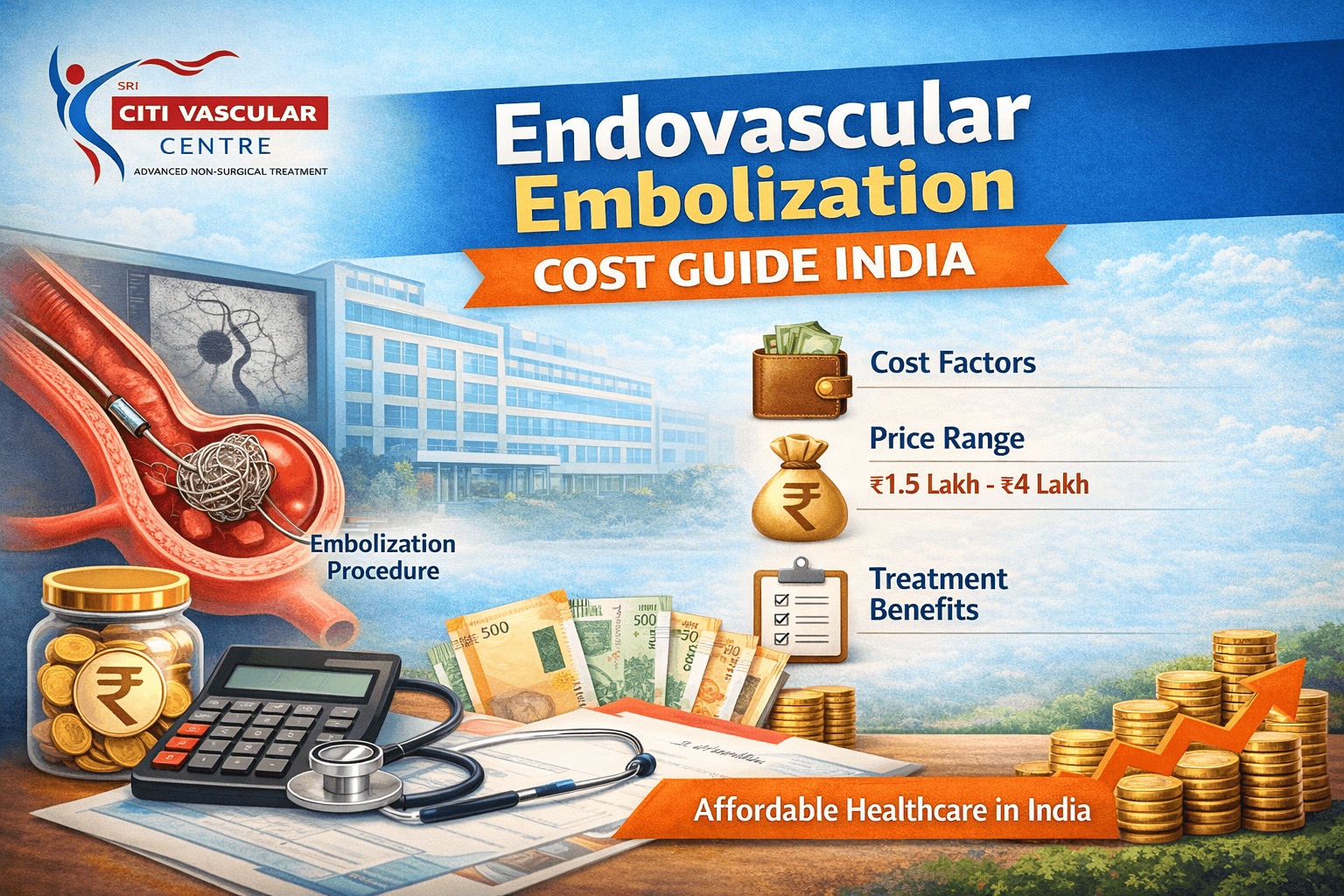
Endovascular embolization treatment in India usually costs between ₹1.5 lakh and ₹5.5 lakh in 2026, depending on the condition, hospital, city, devices used, and whether the patient needs a short hospital stay or multiple sessions. The final price is often lower than in many other countries, which is why India is a popular option for affordable, high-quality embolization care.
If you are planning this treatment, the smartest first step is to compare the estimated cost along with the doctor’s experience, hospital facilities, and expected recovery plan. This guide explains the cost range, what changes the price, and how to request a free estimate.
Endovascular embolization is a minimally invasive procedure used to block abnormal blood vessels. It’s commonly used for:
Brain aneurysms
Arteriovenous malformations (AVMs)
Tumors
Benign Enlarged Prostate
Internal bleeding
Instead of open surgery, doctors use a catheter to deliver embolic agents (like coils or glue) directly into the blood vessel. The result? Faster recovery, less pain, and lower risk.
The average endovascular embolization treatment cost in India in 2026 is usually between ₹1,50,000 and ₹5,50,000. The exact amount depends on the diagnosis, the complexity of the case, the hospital selected, and the type of embolic material used.
In some simpler cases, the total cost may stay closer to the lower end of the range. In more complex conditions, especially brain-related procedures or cases needing advanced devices, the cost can rise significantly.
Average cost in India: ₹1.5 lakh to ₹5.5 lakh.
Consultation: ₹1,000 to ₹3,000.
Diagnostic tests: ₹10,000 to ₹40,000.
Procedure cost: ₹1,20,000 to ₹4,00,000.
Hospital stay: ₹20,000 to ₹80,000.
Medicines and consumables: ₹10,000 to ₹50,000.
Expense Component |
Estimated Cost in India |
|
Doctor consultation |
₹1,000 – ₹3,000 |
|
Diagnostic tests and imaging |
₹10,000 – ₹40,000 |
|
Procedure cost |
₹1,20,000 – ₹4,00,000 |
|
Hospital stay |
₹20,000 – ₹80,000 |
|
Medicines and consumables |
₹10,000 – ₹50,000 |
|
Total estimated cost |
₹1.5 lakh – ₹5.5 lakh |
This breakdown helps patients understand where the money goes. In many cases, the procedure itself is the biggest part of the bill, but imaging, implants, and hospital stay can also affect the final amount.
Here’s where things get a bit nuanced.
Treating a brain aneurysm will usually cost more than embolization for fibroids.
Metro cities like Delhi, Mumbai, and Bangalore tend to be pricier than smaller cities.
Highly experienced interventional radiologists may charge more—but often bring better outcomes.
Advanced embolic materials (like detachable coils) can increase costs.
Some cases require multiple procedures, which adds to the total.
Country |
Average Cost |
|
India |
$1,800 – $6,500 |
|
USA |
$20,000 – $50,000 |
|
UK |
$10,000 – $25,000 |
|
UAE |
$8,000 – $18,000 |
|
Thailand |
$4,000 – $9,000 |
India is widely preferred because embolization treatment is often much more affordable than in Western countries. At the same time, many Indian hospitals offer experienced specialists and modern imaging and intervention facilities.
Most top hospitals and medical facilitators now offer free online cost estimates.
Here’s how you can get one quickly:
Submit your medical reports online
Get reviewed by specialists
Receive a personalized treatment plan
Get a cost estimate within 24–48 hours
A free estimate is usually based on your diagnosis, reports, scans, and treatment needs. Many hospitals and specialist teams can provide a personalized estimate after reviewing the documents.
Share your medical reports and scans.
Submit your diagnosis details.
A specialist reviews the case.
You receive a treatment plan and estimated cost.
The estimate is refined if more tests or procedures are needed.
This process helps patients avoid surprises and plan treatment more confidently. It also makes it easier to compare hospitals and understand whether the quoted cost is fair.
India attracts patients for embolization treatment because it offers specialist care at a more affordable price. Many centers also provide faster appointments and shorter waiting times than hospitals in several other countries.
Other common reasons patients choose India include:
Experienced interventional specialists.
Modern imaging and catheter-based treatment facilities.
Lower overall treatment costs.
Better access to timely care.
Easier communication and patient support.
For patients looking for value, India often offers a practical and dependable option.
Choosing the right specialist for endovascular embolization treatment in India is crucial. Dr. Shaileshkumar Garge at Citi Vascular Hospital, KPHB, is known for his expertise in minimally invasive vascular procedures and patient-centered approach.
We offers:
Expert care for complex conditions like AVMs and aneurysms
Advanced technology for safe and precise procedures
Affordable treatment costs in Hyderabad
Personalized treatment plans for faster recovery
Easy accessibility in KPHB, Hyderabad
For those seeking affordable and high-quality embolization treatment in Hyderabad, Dr. Garge and his team provide a reliable and effective choice.
Let’s get practical—because small decisions can make a big difference.
Don’t settle for the first quote. Compare at least 2–3 hospitals.
Many hospitals offer all-inclusive packages—these often reduce overall cost.
If you're traveling, facilitators can bundle:
Treatment
Stay
Transfers
…at discounted rates.
Some Indian insurance providers partially cover embolization procedures.
Unexpected follow-ups can add to expenses—clarify this upfront.
The success rate is generally 85% to 95%, depending on the condition and complexity.
Yes, in most cases. It’s minimally invasive, meaning:
Less pain
Faster recovery
Lower risk of complications
Typically 1 to 3 days, depending on the procedure.
Not really. It’s done under local or general anesthesia, so discomfort is minimal.
Yes, but doctors usually recommend waiting 5–10 days before long-distance travel.
Many insurance plans do, but coverage varies—always confirm with your provider.